
Some cutting-edge solutions to curb koala decline, based in southern Victoria but with wider implications.
Koala Clancy Foundation reveals the results of a partnership with Melbourne Water, Victoria’s government water authority, to improve revegetation for koalas.
Two fact sheets have been produced through this partnership: Koalas and the Little River, and Creating Koala Hubs on Your Land. The fact sheets are freely available on the Koala Clancy Foundation website.
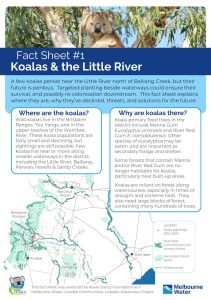

These fact sheets pose a new approach to planting and protecting riparian (river-side) vegetation, that will benefit koalas and other wildlife, improve the success of revegetation projects, and save money for landowners and grantors.
The benefits of this cutting-edge approach aren’t limited to the Little River, Victoria region, as the methodology was designed for wider application throughout the revegetation sector.
..
Beyond the Wildlife Corridor: Koalas need homes, not highways.
Lots of rivers throughout Australia provide corridors for wildlife to move through. When those corridors link larger areas of quality habitat, they provide connectivity, gene-flow and a short-term refuge for the young.
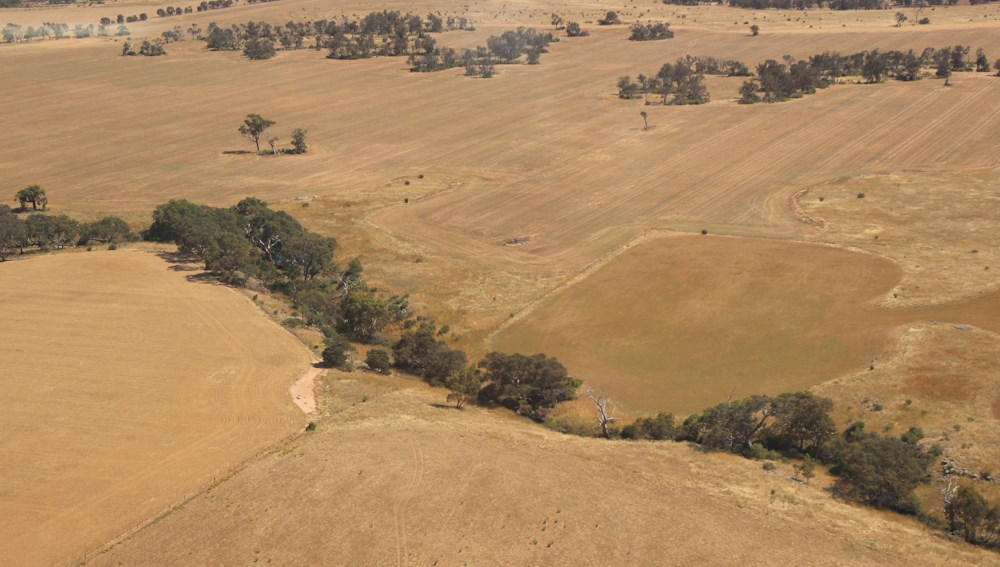
But in many agricultural regions, the narrow river corridor is the only habitat. The large blocks of intact habitat no longer exist, or are so far apart they are ineffective. In addition, the river corridor is much narrower than it was historically – in many places, just one tree wide on each bank. The forest persists, only because of the river, but every year, a few trees are lost to drought, old-age, or insect dieback, taking with them portions of the riverbank. The river corridor has become a highway. Koalas move through, but don’t stay, because the narrow linear forest doesn’t provide a living habitat for them.
Koalas need wider blocks of forest to live in. They need a wide choice of individual trees, safety from roads and predators, cool and moist refuges on hot days. Importantly, they need other koalas nearby.
Wildlife corridors need to be wider if they are to provide habitat for koalas. That can be hard on landowners, but there is a solution.
Making a Wildlife Corridor into a Home for Koalas
Koala Clancy Foundation proposes a method to widen the forest in a way that is beneficial to wildlife, easy for tree planters, and cost-effective for landowners. We call them Koala Hubs.
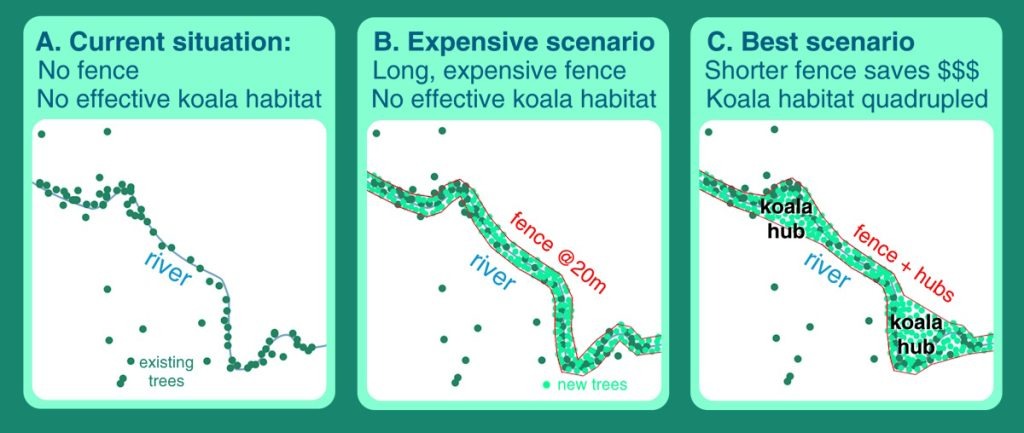
Koala Hubs are larger blocks of revegetation, connected by narrow wildlife corridors – using the natural bends of a river to their best advantage. Fencing is run in straight sections, enclosing several deep bends (see diagram 1.C below).
The bends are highly effective habitat – they contain fertile soil, have water on three sides, they’re cool in summer, and often hold water well into droughts. The trees growing in the river bends are more sheltered from extremes and tend to be better food trees for koalas.
Revegetation in these bigger blocks is usually more successful, too. Remnant trees protect and shade the new plants, browsing pressure is reduced, and soil micro-life is in better condition due to higher proportion of native vegetation. Edge effects are reduced in a broad plantation – it will survive better, grow faster, suppress weeds more quickly, require less maintenance, and is more likely to develop into a naturally regenerating ecosystem.
Fencing off deep bends uses less material, less labour, and is up to 7 times cheaper than fencing that follows the curves of the river. Shorter fences are also easier to maintain.
..
Success of Koala Hub revegetation approach so far.

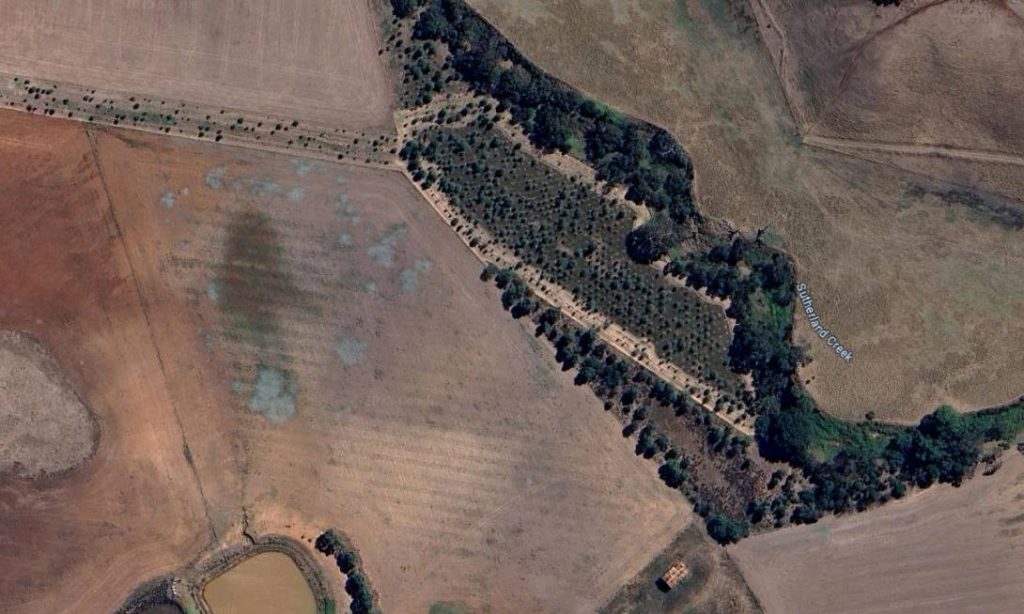
This approach has been trialled and deployed in several large revegetation projects along the Little, Moorabool and Barwon Rivers, and Sutherlands and Native Hut Creeks in Victoria, in regions with struggling koala populations.
On one Moorabool River site, koalas were seen for the first time in decades after Koala Hub planting.
At another site on the Sutherlands Creek planted in 2021, two koalas have been reported since the planting.
Koala Clancy Foundation is eager to continue supporting landowners with riparian revegetation projects on their land and encourages those interested to get in touch.
The Fact Sheets produced in collaboration with Melbourne Water also aim to equip those in the revegetation sector with the information they need to move toward the Koala Hub planting approach.
Click here to view Fact Sheet #1 – Koalas and the Little River
Click here to view Fact Sheet #2 – Creating Koala Hubs on Your Land